
Context before delivery
Buyers are asked to commit before visiting the workshop or seeing the finished piece.
Platform introduction
Craftmark is the missing disclosure layer between custom workshops and buyers: it turns scattered proof into product passports, buyer handover records, and funder-readable impact data on European-hosted infrastructure.
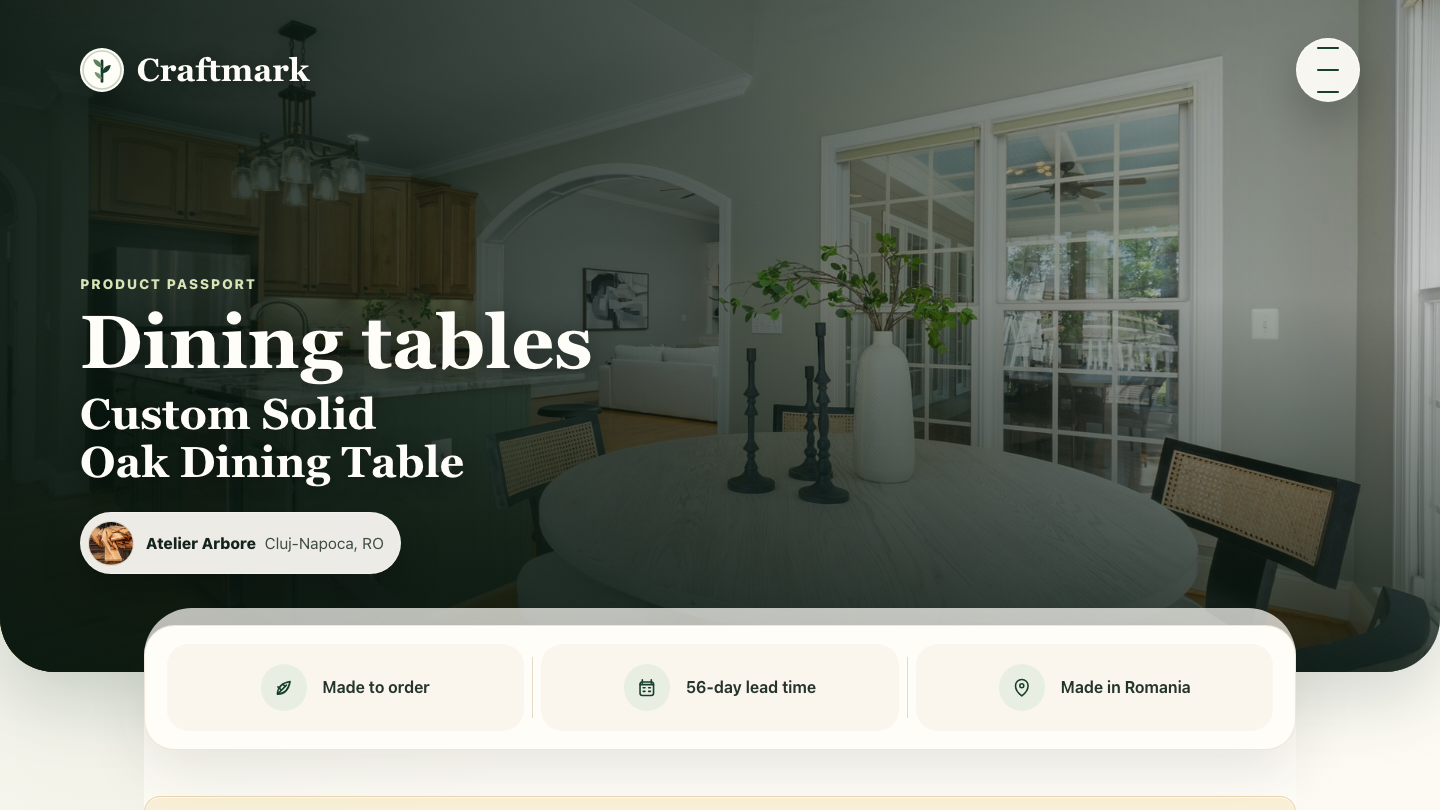
Product passport
Dining Tables
Atelier Arbore • Cluj-Napoca, RO
Passport summary
Made-to-order oak dining tables built for family homes and hospitality spaces.
Open the live passport
craftmark.eu/p/atelier-arbore/custom-solid-oak-... craftmark.eu01
Custom furniture and interior work depends on clear context before the buyer can touch the product. Deposits, specifications, materials, evidence, delivery terms, and aftercare all need context before the finished object exists.
02
Custom work is high-value and cross-border, but the disclosure infrastructure is missing at the exact moment buyers and makers need it: before production starts.
Buyers are asked to commit before visiting the workshop or seeing the finished piece.
Small teams need material, origin, warranty, and repair records but cannot maintain enterprise systems.
Generic marketplaces sell listings; Craftmark captures the evidence trail of a custom order.
03
Makers get a reusable disclosure workspace for product offers, custom orders, evidence, QR handovers, buyer reviews, and exportable reporting without heavy reporting software.
One source for materials, finish options, lead time, care, repair notes, and public claims.
Buyer-specific records for agreed specs, milestones, deposit context, warranty, and delivery.
Private documents, public metadata, and claim levels stay connected to the work they support.
QR handovers, public profiles, buyer reviews, and impact exports help makers explain their value.
04
Buyers get a clearer way to inspect custom work before committing: who is making it, what is being promised, what evidence exists, and what still needs judgement.
Public profiles show workshop context, claim levels, reviews, and relevant company checks.
Buyer-facing pages show summaries and metadata without exposing private document downloads.
The platform distinguishes self-declared, document-provided, platform-reviewed, and independent third-party certified claims.
QR-ready passports preserve care, repair, warranty, materials, and delivery context after handover.
05
Craftmark is built around measured disclosure. It helps people see what is stated, what is documented, what was reviewed, and what remains outside the platform's role.
Self-declared, document-provided, platform-reviewed, and independent third-party certified claims are labelled separately.
Private files stay private, while public views show metadata, hashes, summaries, and review status.
Manual checks and status changes are framed as warnings and context, not promises.
Aggregate exports show workshops onboarded, passports published, claims reviewed, QR use, and material records.
The maker states what is true about origin, materials, care, repair, warranty, or delivery.
Documents stay role-gated; public pages show summaries, hashes, metadata, and claim level.
Admin checks and status changes are audit logged when the platform has reviewed a claim.
Buyers see the level of support behind a claim without private files or buyer identities leaking.
Programmes can inspect aggregate adoption and evidence activity without personal buyer data.
06
The platform keeps sensitive buyer and evidence data out of public pages, uses European hosting assumptions, and keeps the pilot deliberately narrow: disclosure and records, not payments.
07
The pilot already renders public discovery, product passports, maker operations, and buyer handover records. Funding scales what is working into a broader, measurable programme.
Public pages show the offer, maker, passport completeness, claim levels, and what buyers can inspect after login.
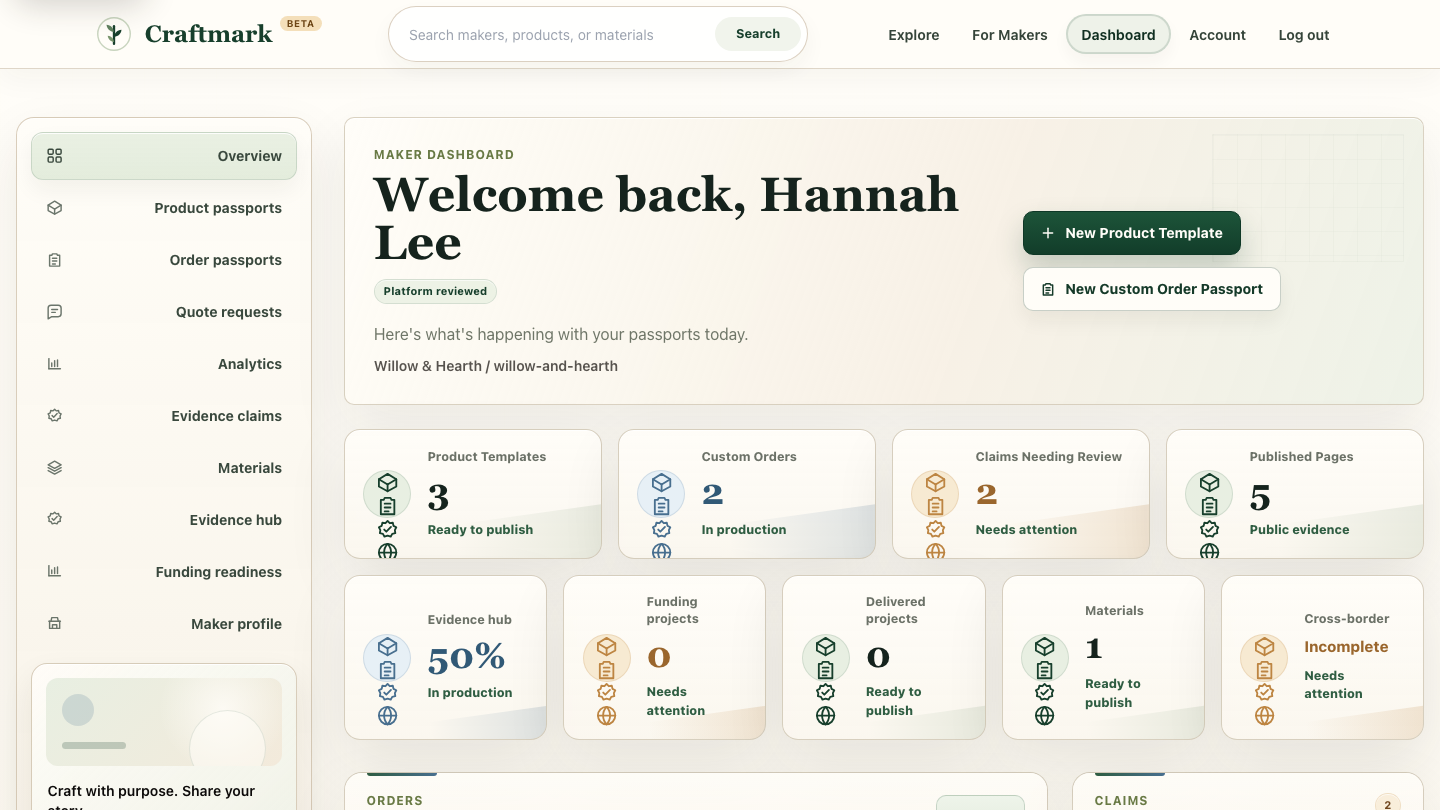
Makers manage product templates, order passports, claims, materials, analytics, funding readiness, and public profile quality in one place.
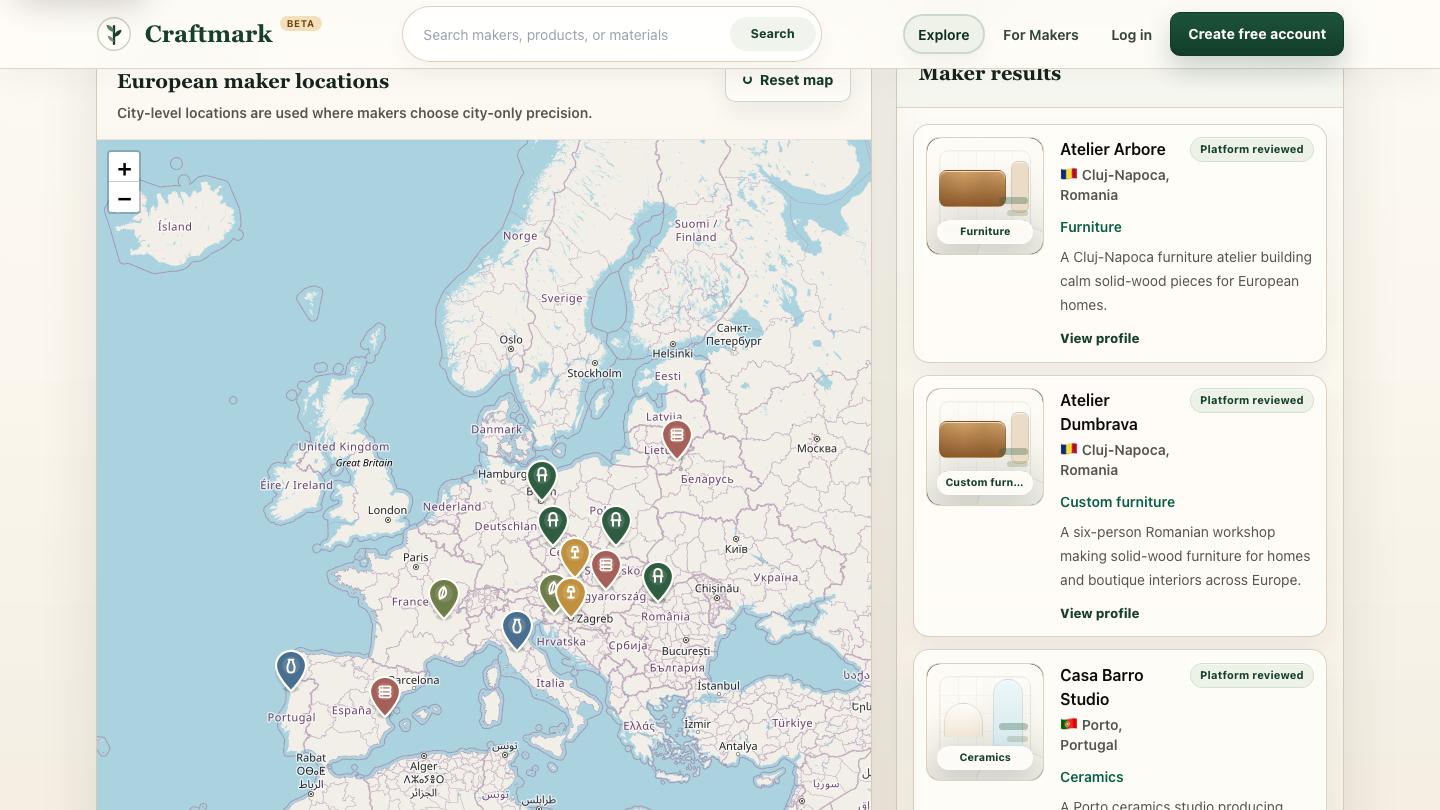
Buyers and programmes can discover public maker profiles by geography, craft category, and evidence level.
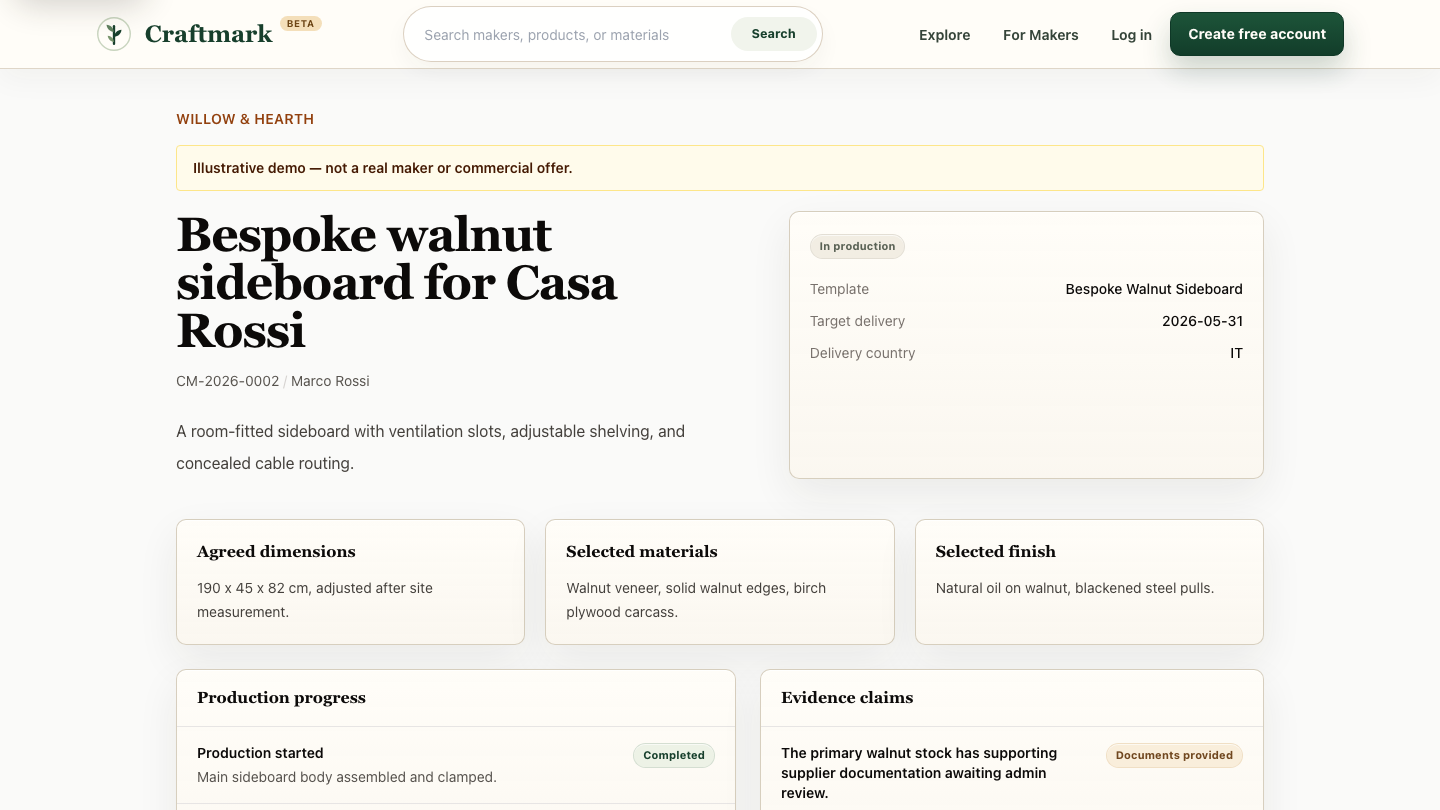
Order pages carry agreed specifications, milestones, care, warranty, review context, and post-delivery history.
08
Public support would turn the working product into a measurable pilot with clear deliverables across makers, buyers, transparency, and circular product information.
Onboard a cross-border group of furniture and interior-product workshops.
Publish product templates, order passports, evidence-backed claims, material records, and QR handovers.
Collect post-delivery buyer reviews and refine buyer-facing disclosure formats.
Report aggregate adoption, evidence activity, material records, and cross-border usage.
09
The platform can be more than a commercial listing site: funding helps make it shared disclosure infrastructure for small workshops that cannot buy heavy reporting systems.
The platform gives micro-workshops tools for records they already need: product data, evidence summaries, reviews, and handover.
Care, repairability, warranty, materials, and origin travel with the product instead of disappearing after delivery.
Shared disclosure formats help buyers compare context across countries, languages, and workshop sizes.
A funded pilot can report maker onboarding, passport publication, evidence activity, QR usage, materials coverage, and buyer understanding.
Support a European-hosted platform introduction pilot where makers gain better disclosure tools, buyers get clearer evidence, and public programmes receive measurable adoption data.